

Why does my therapist mirror me?
If you’ve ever caught your therapist repeating what you say, matching your tone, or gently tilting their head the same way you do, you might’ve wondered, “Why are they doing that?” It can feel strange at first, almost like they’re imitating you, even mocking sometimes. But what’s really happening is something called mirroring, and it’s one of the simplest yet most powerful tools in therapy.
Mirroring is about far more than copying words or gestures. It’s a subtle way of helping you feel seen and understood, sometimes in ways that words alone can’t reach. In many Los Angeles therapy rooms, mirroring forms the backbone of emotional connection between therapist and client. It’s how your therapist shows that they’re truly tuned in, not just intellectually but emotionally and physically too.
For many people, mirroring can even feel a little healing, especially if they grew up without caregivers who noticed or validated their emotions. When your therapist reflects your tone, body language, or words back to you, they’re rebuilding something that may have been missing: a sense of being truly recognized.
So, if you’ve ever wondered why your therapist seems to “mirror” you, this article will walk you through what’s really happening: the science behind it, the psychology beneath it, and how it helps you reconnect with yourself and others.
When it’s done right, mirroring is empathy reflected right back at you, but when done badly, it can do more harm than good.
Watch the full interview here!
What “mirroring” really means in therapy
Mirroring is one of those therapy words that sounds simple but holds a lot of emotional weight. On the surface, it might look like your therapist is just repeating what you said, but underneath, it’s about something much deeper. As we mentioned, mirroring is how your therapist helps you feel seen, heard, and validated, especially if that didn’t happen often growing up.
“Having parents that didn’t make you feel seen, heard, validated, or guide you to name your emotions means your therapist has to do all of that mirroring you lost in childhood.”
In other words, when you walk into a therapy session as an adult, you’re not just talking about your life; you’re also subconsciously searching for the kind of emotional safety you might never have had. Mirroring is one of the ways your therapist helps you find it.

In the language of attachment theory, this process rebuilds what’s known as secure attachment. When we’re mirrored as children, we learn that our emotions make sense and that our inner world is worth paying attention to. When that doesn’t happen, we often grow up second-guessing our feelings or believing that being vulnerable is unsafe. Research shows that around 50% of adults have some form of insecure attachment resulting from early relational experiences. Therapy offers a chance to change that.
Mirroring isn’t just verbal. It’s a combination of tone, facial expression, posture, and emotional pacing – all the subtle cues that say, “I’m here with you.” When your therapist’s body language and words align with your feelings, it signals to your nervous system that you’re safe to open up.
That’s why, in many Los Angeles therapy practices, mirroring is used not as a trick or tactic, but as a gentle invitation to connection. It’s not about your therapist performing empathy, it’s about you finally feeling what empathy actually feels like.
So if you’ve ever left a Los Angeles therapy session wondering why your therapist echoed your words or matched your tone, it’s not an accident. It’s a small but powerful way of helping you relearn what it means to be seen.
Ready to take the first step and truly be seen? The therapy team at GGPA are currently accepting new clients.
The hidden purpose of mirroring
Mirroring might look like a therapist simply nodding, repeating your words, or keeping their tone in sync with yours, but beneath the surface, it’s doing something far more profound. It’s not about politeness or conversational rhythm. It’s about giving your nervous system an experience of safety.
When you’ve spent years feeling misunderstood, dismissed, or told you’re “too much,” your body learns to brace for rejection. Mirroring helps reverse that. It’s the therapist’s way of saying, not with words but through presence, “You make sense.” That message lands deeper than logic ever could.
“Mirroring is not just something we do to repeat what you’ve shared. It’s working internally to help you feel that you have space to be seen.”
The moment someone truly reflects your inner world back to you, something usually shifts. Shoulders drop. Breath steadies. The body recognizes safety before the mind even does.
This process builds secure attachment within the therapeutic relationship, which then extends into your relationships outside therapy. When clients feel mirrored, they begin to trust that their emotions won’t overwhelm or alienate others. In other words, they start to believe connection is possible.
It’s not just intuition, either, there’s research behind it. Studies show that clients who report feeling “seen and understood” in therapy have a much higher treatment success rates compared to those who don’t. That sense of being seen is what allows deeper emotional work to begin.
Mirroring also helps soothe the brain’s alarm system. When a therapist validates your experience, your amygdala – the part responsible for detecting threats – quiets down. The body stops scanning for danger, which is especially vital for trauma survivors who live in a state of chronic alertness. Over time, this creates new emotional patterns where calm and connection replace hypervigilance.

In short, mirroring isn’t mimicry, it’s essential attunement. It’s your therapist meeting you exactly where you are, emotionally, verbally, and physically, and helping you believe it’s safe to stay there.
So in Los Angeles therapy, mirroring isn’t a performance. It’s a form of care. It’s your therapist’s way of saying, “You’re safe to be fully you here.”
When words and feelings don’t match
Have you ever laughed while talking about something painful? Or smiled your way through a story that actually hurt? It’s a surprisingly common reflex and one that therapists notice instantly. That disconnect between what you say and how you express it is called incongruent affect, and it’s something mirroring gently helps bring into awareness.
“For example, I’d say ‘I noticed that you’re talking about something really scary, yet I’m wondering if you noticed that you’re actually smiling about it.’”
It’s not about calling you out, it’s about calling you in, helping you see the emotional split that your body has learned as a way to cope.

Many of us develop these patterns early in life. If your family avoided uncomfortable emotions, you might’ve learned to soften your pain with humor or deflect vulnerability with a grin. Over time, it becomes second nature. It’s about survival when you grow up under those conditions, but when you’re fully grown it’s no longer keeping you safe. So in therapy, mirroring helps you notice what’s really happening underneath.
When your therapist gently points out that mismatch and models the appropriate tone or expression, they’re helping your nervous system realign. Your brain learns that it’s safe to feel sadness without covering it up, or to express anger without fear of losing connection. Research shows that nearly 70% of adults mask their true emotions in socially uncomfortable situations in order to “people please”. Mirroring begins to unlearn that habit by inviting congruence back into the conversation.
In many Los Angeles therapy sessions, this looks subtle: a therapist softening their voice when you talk about loss, or mirroring your pace when you hesitate to share something hard. It’s not manipulation, although if you’re on high alert it may feel that way… it’s actually an attempt at regulation. These small adjustments send the message that your emotions make sense here.
Through repetition, that awareness grows. You begin catching yourself mid-laugh, mid-sigh, mid-deflection, noticing perhaps for the first time how your body tries to protect you from your own feelings. And that’s the point where real emotional change starts.
If you notice yourself laughing through pain or smiling through discomfort, therapy can help you reconnect your outer expression with your inner truth. Even mixed signals are welcome; they just need a bit of space to be understood.
Mirroring in couples therapy
Mirroring takes on a whole new rhythm when there are two people in the room. In couples therapy, it’s not just about the therapist helping one person feel seen, it’s about teaching both partners how to see each other.
Emotionally Focused Therapy (EFT), the main approach used at GGPA, is built on this principle. The therapist acts as a kind of emotional interpreter, helping each partner reflect, validate, and respond to what the other is truly trying to say beneath the surface frustration.
“You can mirror and validate each of the partners’ experiences. It’s affirming, validating, making sense, and normalizing.”
When a therapist models that for a couple (responding to each partner’s emotional truth without judgment) both begin to feel safer, less defensive, and more willing to listen.
This process is especially powerful because conflict in relationships often comes down to emotional misfires. One partner might be expressing hurt as anger, while the other hears criticism instead of pain. Mirroring slows everything down long enough for both sides to catch what’s really being said.
Instead of “you’re wrong,” the message becomes “I can see why that would hurt.” That small shift changes everything. It transforms arguments into understanding and blame into empathy. Over time, couples learn to do this for themselves: noticing tone, posture, and words not as attacks, but as signals of deeper need.
The results speak for themselves. Research on EFT shows that 70–75% of couples move from distress to recovery, and 90% show significant improvement. That’s the power of attunement: when partners start mirroring one another in healthy ways, they rebuild connection neuron by neuron, word by word.
In Los Angeles, busy lives and emotional disconnection often run high, but mirroring in couples therapy offers something rare: a pause. A safe space where love can be heard again. If communication with your partner feels like speaking different languages, couples work rooted in EFT can help you both feel understood again.
Mirroring is the bridge, and Los Angeles therapy is where you can start crossing it together.
What mirroring does to the brain
When your therapist mirrors you, it might feel emotional, but it’s also profoundly biological. Behind every nod, every matching tone, and every reflected expression, your brain is quietly at work, rewiring itself toward safety.
There’s a reason it feels good to be understood. When someone reflects your feelings accurately, your mirror neurons – specialized brain cells responsible for empathy and imitation – fire in sync. These neurons help you connect emotionally, making it possible to “feel felt.” It’s a neural reality.
“We’re closing the gaps in your brain so you can form better alignment within yourself.”
That’s exactly what’s happening when therapy feels healing. Through consistent mirroring, your brain begins to build new neural pathways that link emotional experience with self-awareness and regulation.
It’s the science of neuroplasticity: the brain’s ability to reorganize and adapt based on new experiences. Every time your therapist mirrors your emotions with accuracy and care, it strengthens these new circuits. Over time, those old, defensive patterns (the ones built around shame, avoidance, or self-blame) start to fade.
Research supports this, too. Studies have found that regular therapy can lead to increased grey matter volume in regions of the brain responsible for emotion regulation and empathy. In simple terms, therapy can literally reshape the brain toward connection.
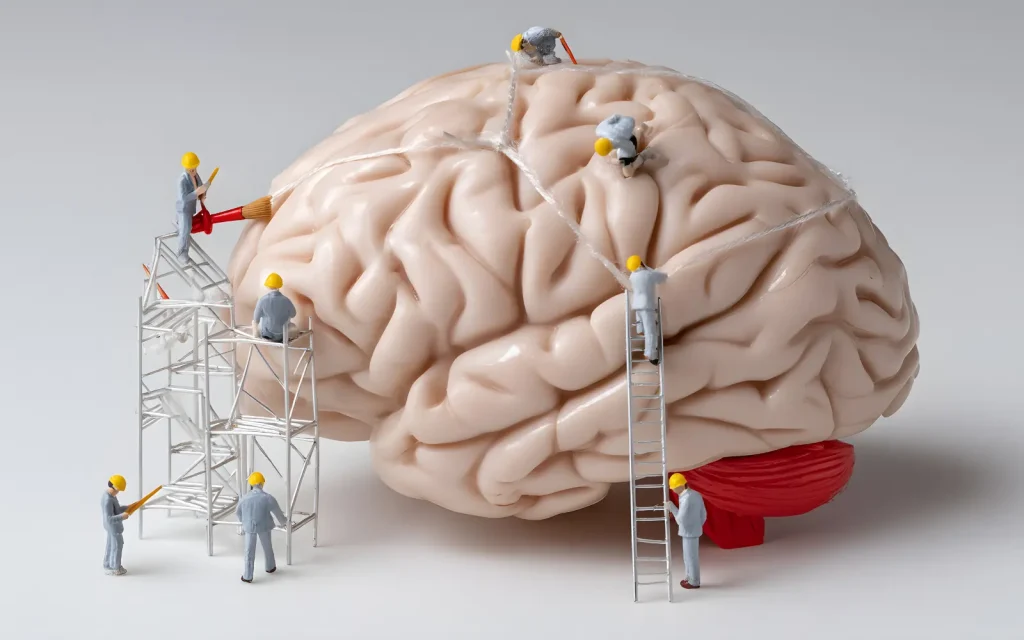
This is why repetition matters. Mirroring isn’t a one-off technique, it’s something your therapist does consistently so that the brain learns, through experience, that vulnerability and safety can coexist. Over time, what once felt unbearable – being seen in your rawest moments – starts to feel grounding instead.
In Los Angeles therapy, this neurological dance between therapist and client forms the invisible framework of change. You might not see it happening, but inside, your neurons are learning a new language: trust.
When you show up week after week for Los Angeles therapy, you’re retraining your brain to believe that connection is safe. And that belief is the foundation of lasting healing.
Mirroring beyond the therapy room
The beauty of mirroring is that it doesn’t stop when you leave the therapy office. Once you’ve experienced what it feels like to be genuinely seen, it begins to change how you relate to others and how you see yourself.
“You don’t have to be a therapist to mirror. But in therapy, there’s purpose, there’s science, and repetition.”
Outside the therapy room, mirroring shows up in subtle, everyday ways: the friend who leans in when you’re upset, the partner who matches your tone instead of dismissing it, or the colleague who says, “I get what you mean,” and truly does.
When those moments happen, your brain recognizes the same safety cues you’ve been learning in therapy. That’s because emotional validation, i.e. being acknowledged and accepted for what you feel, is a cornerstone of human connection. Emotional validation is one of the strongest predictors of relationship satisfaction.
But there’s a balance. People who are naturally empathetic may overdo mirroring, tuning in so closely that they lose themselves in someone else’s emotions. That’s where codependency often begins, where care turns into self-erasure. Therapy helps you find the middle ground: caring deeply without losing your center.

Cultural background also shapes how we mirror. Some cultures encourage emotional openness; others prize composure and restraint. Both have value, but therapy invites you to notice how your own emotional “language” was formed and whether it still serves you.
Once you become aware of these patterns, mirroring turns into a life skill. You start noticing who feels safe to open up to, and when someone else might need a little reflection back from you. It’s empathy with boundaries; the healthiest kind.
In many Los Angeles therapy practices, clients are encouraged to take what they learn in session into their everyday relationships. That might mean pausing to notice your tone during a disagreement or offering validation before advice.
So mirror the people you love to help them feel seen. It’s one of the quietest ways to build connection. And it’s just one thing we teach at GGPA.
Final thoughts
Mirroring might seem like one of those background things your therapist does without much thought, but it’s actually the heartbeat of connection in therapy. Every nod, pause, and repeated phrase is there for a reason: to help you feel safe enough to be fully yourself.
“We’re closing the gaps in your brain so you can form better alignment within yourself.”
Grazel’s describing what happens when therapy works at its best. Mirroring repairs what might have gone unseen in your early relationships. It teaches your body and brain that your emotions make sense, that your needs are valid, and that being met with empathy is not something you have to earn.
Over time, this becomes the foundation for healthier relationships, not just with others, but with yourself. You start recognizing when you’ve been masking your feelings, when you’re softening your truth, or when you’re finally allowing yourself to be real. Those small recognitions add up to profound change.
In GGPA’s Los Angeles therapy, mirroring isn’t about technique; it’s about building an outstanding professional relationship. It’s your therapist quietly holding up a mirror and saying, “Here you are. And you’re safe now.”
If you’re curious about what real emotional attunement feels like, you can book a session with Grazel Garcia Psychotherapy & Associates. We offer in-person and online Los Angeles therapy sessions where you can experience what it’s like to be truly seen, maybe for the first time.
Grazel Garcia Psychotherapy & Associates is one of the leading individual and couples therapy practices in the wider Los Angeles area. Specializing in treating root causes through the lens of EFT, GGPA clients can expect a warm, culturally-attuned approach to therapy. Call 323-487-9003 and schedule your free consultation today!

