

What are ADHD spouse burnout symptoms?
ADHD shows up in a marriage in all sorts of unexpected ways. Some of them are small and endearing, like your partner getting completely lost in reorganising the spice drawer when you only asked them to put the paprika back. Others are heavier. Harder to name. And when you don’t have the language for what’s happening, it’s easy to assume the worst about the person you love.
One of the most misunderstood pieces of this puzzle is ADHD burnout. It creeps in slowly, disguising itself as being “tired” or “off your game,” until one day the ADHD partner can’t keep pushing through in the way they’ve been doing for years. From the outside, their behavior might look unmotivated or avoidant. On the inside, it’s far more complex, and it has nothing to do with laziness.
As adult ADHD diagnoses continue to rise, this matters more than ever. The National Institute of Mental Health estimates that about 4.4 percent of adults in the United States have ADHD, and many of them are in largely healthy relationships where their partner is trying to make sense of patterns they’ve never been taught to recognize.
Burnout doesn’t just affect the individual living with ADHD. It reshapes the whole relationship. Routines slide, communication becomes strained, and resentment starts to brew on both sides. Without support, the distance that forms can feel frightening.
Watch the full interview here!
As Grazel put it, “ADHD burnout or autism burnout is real… you may think that it’s just laziness.” Grazel Garcia
Understanding what burnout looks like is one of the most powerful ways couples can protect their connection. Once you can name what’s happening, you can start changing the way you move through it, together.
- What ADHD Burnout Actually Looks Like in a Spouse
- Why ADHD Spouses Burn Out
- Early Warning Signs of ADHD Burnout in Marriage
- How ADHD Burnout Affects the Non-ADHD Partner and the Relationship
- Resentment, Hopelessness, and the Emotional Toll of ADHD Burnout
- What ADHD Burnout Looks Like Inside Couples Therapy
- Final Thoughts
What ADHD Burnout Actually Looks Like in a Spouse
When your partner lives with ADHD, you might already be familiar with the day-to-day rhythm of it: bursts of creativity, moments of distraction, deep dives into interests you didn’t even know existed until five minutes ago. Burnout is different. It hits on a deeper level, and the signs often show up long before either of you realizes what’s happening.
One of the earliest shifts is a kind of exhaustion that doesn’t make sense. This isn’t “I stayed up too late” tired. It’s a chronic heaviness that lingers even after a full night’s sleep or a quiet weekend.
“Even when they’re resting, the fatigue is not quenched by the rest.”
It’s a hint that the nervous system has been carrying too much for too long.

Emotional dysregulation tends to rise at the same time. Research shows that adults with ADHD experience intense emotional swings far more frequently than neurotypical adults, often struggling to return to a calm state after stress. So when burnout sets in, emotions feel sharper, quicker, and harder to manage.
Cognitive overload also becomes part of the picture. Focusing, planning, switching tasks, remembering what you walked into the kitchen for; all of it demands more energy than usual. Studies suggest that around 90 percent of adults with ADHD experience some level of executive dysfunction, with burnout making those struggles even more pronounced.
Burnout has a way of shrinking someone’s capacity. Suddenly the things they used to manage – house tasks, schedules, even basic routines – feel overwhelming. That’s where “skills atrophy,” another piece Grazel highlighted, starts to show.
“Skills atrophy… you forget because the brain is not working.”
It’s not a choice. It’s a symptom.
You might notice your partner becoming quieter. Or more irritable. Or zoning out more often because their brain is trying to conserve whatever energy it has left. Small tasks pile up. Conversations feel harder to track. Everything takes more out of them than it used to.
And none of this means they don’t care. It means they’re depleted.
If you’re beginning to recognize some of these patterns at home, support is available. Couples often feel relief simply by having a space to name what’s happening.
Why ADHD Spouses Burn Out
If you’ve ever watched your partner push themselves far beyond what seems sustainable, but wondered if it’s in your head, you’re not imagining it. Many ADHD spouses spend years quietly working twice as hard just to appear “on top of things.” Masking becomes their default mode: smoothing out their behavior, hiding their overwhelm, and trying to look as if everything is under control. It’s a survival strategy, but it comes at a cost.
Masking is one of the biggest drivers of ADHD burnout. It asks the brain to run in a way it wasn’t designed to run, and eventually the strain shows.
“They’ve been masking for a long time… masking is a big, big factor to burnout.”
What starts as an attempt to “fit in” becomes an emotional and cognitive marathon.
And while the ADHD partner often looks incredibly functional on the outside, internally it can feel like they’re sprinting on a treadmill that never turns off.
“You’re trying and putting so much effort, but your brain is not working.”
That mismatch between effort and outcome is exhausting.
Research backs this up: masking in neurodivergent adults is linked to higher rates of anxiety, depression, and emotional exhaustion. When masking becomes a daily habit rather than an occasional tool, burnout is almost inevitable.
Another piece of the puzzle is the difficulty many ADHD individuals have with asking for help. While perceived as stubbornness, it’s not – it’s often shame, or fear of being misunderstood, or simply not knowing how to articulate what feels ‘off’. And when someone is already walking around depleted, reaching out feels even harder.
Over time, this combination – long-term masking, relentless effort, and lack of support – builds internal pressure. The ADHD partner may start overcompensating, taking on too much, trying harder and harder just to feel “caught up.” Eventually, the body and brain can’t keep up with the expectations placed on them.
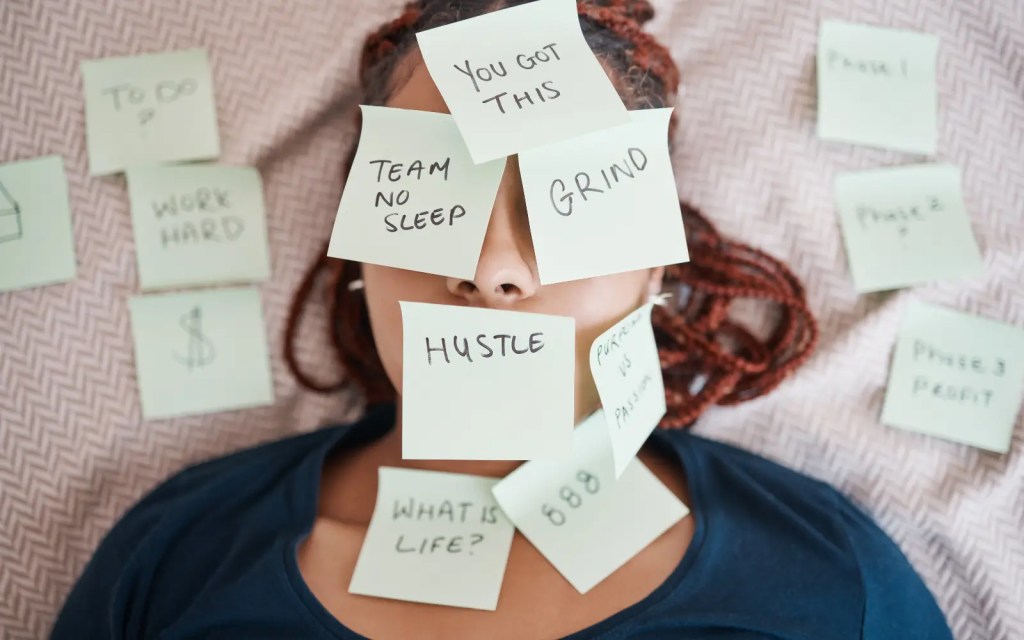
Burnout becomes the breaking point that nobody saw coming.
If masking has become your everyday survival strategy, therapy can give you a place to unpack the pressure instead of carrying it alone.
Early Warning Signs of ADHD Burnout in Marriage
Burnout rarely arrives with a dramatic crash. For most couples, it shows up gradually, in little moments that don’t seem connected at first. One week it’s skipped meals. The next week it’s unfinished tasks. Then suddenly you realize your partner has quietly slipped into a state of overwhelm that touches every part of your relationship and you have no idea how to help them get back to their normal self.
One of the earliest indicators is hyperfocus. Hyperfocus can be one of the most remarkable ADHD traits: the ability to dive so deeply into something that the rest of the world momentarily disappears. But when someone is already stretched thin, that same hyperfocus can pull them away from the basics: eating, drinking water, resting, switching tasks, or tending to shared responsibilities.
“If you’re hyper focusing a lot and you’re not eating well, that’s a warning sign.”
Research suggests that hyperfocus appears in around 78 percent of adults with ADHD. When burnout begins building underneath, that laser-like attention becomes more rigid. Hours pass. Needs get ignored. Routines slip. And the non-ADHD partner often feels confused or shut out.
Another sign is task switching becoming unusually difficult. ADHD brains already struggle with transitions, but burnout exaggerates that challenge. Something as simple as moving from washing dishes to taking the laundry upstairs can feel like trying to turn a cruise ship in a narrow channel. And the wider the “gap” between starting a task and returning to it, the deeper the burnout tends to be.
Emotional reactivity also increases. People with ADHD are statistically more likely to struggle with regulating emotions, often experiencing stronger and faster reactions than neurotypical partners. During ADHD burnout, even neutral feedback can feel sharp or threatening. A simple “Did you remember to…” can land like a criticism, not because the partner is sensitive or defensive, but because their nervous system is tired.
Then there’s the quiet, inward warning sign: minimizing their own needs.
“Minimizing your own needs… that’s another warning sign.”
When someone begins convincing themselves they don’t need help, or that no one will understand them anyway, burnout deepens. They may pull back emotionally, become more isolated, or retreat into coping strategies that make them feel safe but distant.
Behind every one of these signs is the same story: the person you love is overwhelmed, but may not have the words to say so.
If you’re seeing these patterns unfold, reaching out early can soften the landing and help you change direction before burnout deepens.
How ADHD Burnout Affects the Non-ADHD Partner and the Relationship
ADHD doesn’t exist in a vacuum, so when ADHD burnout enters the picture, the whole relationship feels it. Couples often describe it as a slow shift – at first it’s just a little extra stress, a few more unfinished tasks, a sense that the balance is slightly off. Then one day the non-ADHD partner realizes they’ve been carrying far more than they ever intended.
A big part of this dynamic comes from how ADHD burnout affects responsibility. When the ADHD partner is hyperfocused or emotionally overwhelmed, everyday routines start slipping through the cracks. It’s not intentional, and it’s not neglect. It’s about capacity.
“The ADHD partner can forget to eat… forget shared responsibilities at home… and that will impact the non-ADHD partner.”
And once one partner begins missing tasks, the other naturally steps in to keep things afloat.
The problem is: stepping in often becomes stepping up… and then taking over.

Over time, the non-ADHD partner may find themselves doing the meal planning, the cleaning, the scheduling, the emotional labor, the remembering… all while trying not to resent their partner. Meanwhile, the ADHD partner may feel ashamed, guilty, or defensive because they know something is off but don’t know how to fix it.
Research shows that couples where one partner has ADHD often report significantly lower relationship satisfaction and more frequent conflict. That’s not because they’re incompatible, but because the emotional and practical load becomes uneven without either person meaning for it to happen.
And while the non-ADHD partner may feel abandoned in the day-to-day, the ADHD partner may feel misunderstood or judged. Both people end up hurting in different ways. That’s when resentment begins to build on both sides.
“Both have resentment towards one another… because of the negative cycle that’s been brewing.”
Once that cycle takes hold, communication slows down. Small concerns get swallowed. Emotional intimacy thins out. The couple starts responding to symptoms rather than seeing the underlying burnout driving everything.
But these moments don’t mean the relationship is failing. They mean both partners are exhausted in ways neither was taught to name.
If the balance at home feels off, therapy can help both partners feel less alone and more understood.
Resentment, Hopelessness, and the Emotional Toll of ADHD Burnout
Burnout drains energy, but it also starts to wear down the emotional glue that holds a relationship together. When someone has been masking, overworking, or silently struggling for too long, their inner world begins to shift. What once felt manageable starts to feel heavy. What once felt clear becomes foggy. And suddenly the emotional weight of ADHD burnout becomes impossible to ignore.
For the ADHD partner, resentment is often the first emotion to surface, though it rarely looks like anger on the outside. It comes out sideways: in withdrawal, numbness, or an almost mechanical way of moving through the day.
“Once we’re in resentment, we can’t feel the anger anymore… there is a feeling of hopelessness.”
It’s not that they’ve stopped caring, it’s that their nervous system has gone into self-preservation mode.
The hopelessness grows slowly. Burnout tells the ADHD partner they’re failing, even when they’re trying their hardest. It convinces them they’re letting everyone down, especially the person they love most. And when shame mixes with exhaustion, emotional distance becomes a kind of shield.
Meanwhile, the non-ADHD partner often feels confused or hurt by what looks like disinterest or detachment. They may interpret the withdrawal as “not trying,” when in reality the ADHD partner is overwhelmed to the point of emotional shutdown.

This mismatch in understanding can become a pressure cooker. Partners start reacting to each other’s reactions rather than their underlying needs. Conversations get shorter, patience thins and neither person feels seen. Over time, this emotional strain can ripple into broader relationship dissatisfaction.
The good news is that hopelessness responds well to understanding. When couples begin naming the emotional toll of burnout, the resentment often softens. Clear communication replaces blame. Gentle curiosity replaces defensiveness. And connection becomes possible again.
You don’t have to navigate this heaviness by yourself. A GGPA therapist can help you slow down, breathe, and rebuild connection.
What ADHD Burnout Looks Like Inside Couples Therapy
When couples finally come into ADHD couples therapy carrying the weight of burnout, it’s common for both partners to feel a mix of confusion, frustration, and quiet relief. They’ve been dancing around the same patterns for months, sometimes years, without realizing there’s a name for what’s happening. The turning point often begins with learning that this isn’t a relationship failure, or an individual failing on one or both sides. It’s simply a neurodivergence that’s been overlooked.
One of the first things Grazel emphasizes is the role of psychoeducation. Many couples simply haven’t been taught what ADHD burnout looks like, or how profoundly it can influence communication, energy levels, task-sharing, and emotional connection.
“The therapist has to be well aware [of neurodivergence and burnout]… if they’re not aware, they’re not going to be able to provide psychoeducation.”
When a therapist misses the neurodivergent piece, both partners end up personalizing behaviors that are actually symptoms.
That misinterpretation can quietly damage the relationship. The ADHD partner may feel judged or misunderstood, while the non-ADHD partner may feel ignored or unsupported. With no shared framework to make sense of these moments, they start reacting to each other instead of responding to the burnout driving the dynamic.
Another challenge is how similar ADHD symptoms can look to trauma responses.
“PTSD and neurodivergence can look so similar.”
Without someone trained to recognize the difference, couples may receive guidance that unintentionally reinforces shame instead of reducing it. That’s why specialized support matters: not to label anyone, but to bring clarity to where both partners have felt lost.
Inside session, the work often begins with slowing everything down. Couples learn to name patterns without blaming each other. They explore how masking, emotional overload, or task-switching difficulties have shaped their daily life. Most importantly, they begin developing a shared language; a way of saying “This is burnout,” instead of “This is your fault.”
Over time, partners start seeing each other more accurately and responding with more softness. That alone can shift the entire emotional climate of the relationship.
If you’ve felt misunderstood in past therapy, it may be worth working with someone who specializes in neurodivergent couples, like the team at GGPA.
Final Thoughts
When you’ve been living in the fog of burnout for a while, it’s easy to lose sight of the truth: nothing about this makes you or your partner broken. ADHD burnout isn’t a character flaw, a lack of commitment, or a sign that your relationship is beyond repair. It’s a signal. A very human, very understandable sign that something in your day-to-day life has been too heavy for too long.
The moments that feel the most discouraging – the silence, the missed cues, the frustration on both sides – are often the ones that soften first when couples finally understand what they’re dealing with. Once you can name the dynamic, the shame begins to lift. You’re suddenly able to see your partner not as someone who isn’t trying, but as someone who’s overwhelmed. And in the same breath, you can recognize your own exhaustion without blaming yourself for it.
Understanding the early signs of burnout, how it affects each of you, and how it weaves its way into the relationship gives you room to make different choices. The patterns stop feeling so personal. The resentment doesn’t sting in the same way. You both get to shift from survival mode to something gentler, more collaborative, and more hopeful.
You don’t need perfection to move forward. You just need the awareness, the support, and the willingness to approach each other with a little more softness. Once those pieces fall into place, healing becomes possible, and connection becomes easier to reach again.
Grazel Garcia Psychotherapy & Associates is one of the leading individual and couples therapy practices in the wider Los Angeles area. Specializing in treating root causes through the lens of EFT, GGPA clients can expect a warm, culturally-attuned approach to therapy. Call 323-487-9003 and schedule your free consultation today!